

Does Mewing Actually Change Your Jawline or Straighten Teeth? What Dallas Patients Should Know
By Elvebak Orthodontics | August 14, 2026
Scroll through TikTok, Instagram, or YouTube and you’ll quickly find claims that mewing can sharpen your jawline, reshape your face, or even straighten your teeth without braces.
It sounds appealing-especially if you’re in Dallas and want a more defined profile without committing to orthodontic treatment.
But does mewing actually work?
The evidence doesn’t support the dramatic transformations commonly shown online. The American Association of Orthodontists states that there is no scientific evidence supporting claims that mewing can reshape the jaw, and current research does not establish it as a substitute for orthodontic treatment.
That doesn’t mean tongue posture is irrelevant. It means there’s an important difference between healthy oral posture and trying to force your teeth or jaw into a new position.
What Exactly Is Mewing?
Mewing generally refers to keeping the tongue against the roof of the mouth while maintaining closed lips and a particular resting posture.
The idea became popular through the work associated with British orthodontist John Mew and the broader concept of “orthotropics.” Social media later turned it into a DIY facial-sculpting trend.
The promise is simple: maintain the right tongue position consistently and your jaw will supposedly become more defined while your teeth naturally straighten.
The problem is that a popular technique is not automatically a clinically proven orthodontic treatment.
A systematic review examining tongue and orofacial interventions in developing dentition found some potentially promising findings, but also concluded that the quality of the available evidence was questionable.
Can Mewing Actually Change Your Jawline?
For most adults, you should not expect mewing to dramatically remodel your jawbone.
Your facial appearance is influenced by genetics, skeletal structure, age, body composition, muscle development, and many other factors. Holding your tongue in a particular position does not give you the same controlled forces used in orthodontic or surgical treatment.
This is why online before-and-after photos can be misleading.
Lighting, camera angle, head position, facial expression, body-fat changes, and even hairstyle can make a jawline look significantly different without any meaningful skeletal change.
If your goal is a more defined jawline because you have a concern about your facial structure or bite, an orthodontic evaluation can tell you whether the issue is related to tooth position, jaw relationship, or something else.
Can Mewing Straighten Crooked Teeth?
Not predictably.
Teeth move when controlled forces are applied to them over time, producing a biological response in the supporting tissues. Orthodontic treatment uses carefully planned forces to move individual teeth and, when appropriate, address bite relationships.
Trying to force your tongue against your teeth is not equivalent to having a customized orthodontic treatment plan.
There is also a potential downside to aggressively pushing the tongue or teeth in an attempt to create a specific result. Uncontrolled forces can contribute to unwanted tooth movement or bite changes.
If you’re dealing with crowding, spacing, an overbite, underbite, or crossbite, an orthodontist can determine what is actually causing the problem instead of relying on a social-media technique.
What About Kids and Teenagers?
This is where the conversation becomes more nuanced.
During childhood and adolescence, the jaws and facial structures are still developing. Tongue posture, swallowing patterns, breathing habits, and other oral functions can be relevant to dentofacial development.
Research has investigated myofunctional and orthodontic approaches for developing dentition, but the evidence is not strong enough to turn internet “mewing” instructions into a universal treatment.
Parents in Dallas should therefore avoid treating mewing as a DIY orthodontic solution for a child with crowded teeth, an open bite, mouth-breathing concerns, or another developmental issue.
A professional assessment can identify whether orthodontic treatment, myofunctional therapy, or another approach is appropriate.
What Actually Straightens Teeth?
For patients who want measurable, predictable tooth movement, orthodontic treatment remains the evidence-based route.
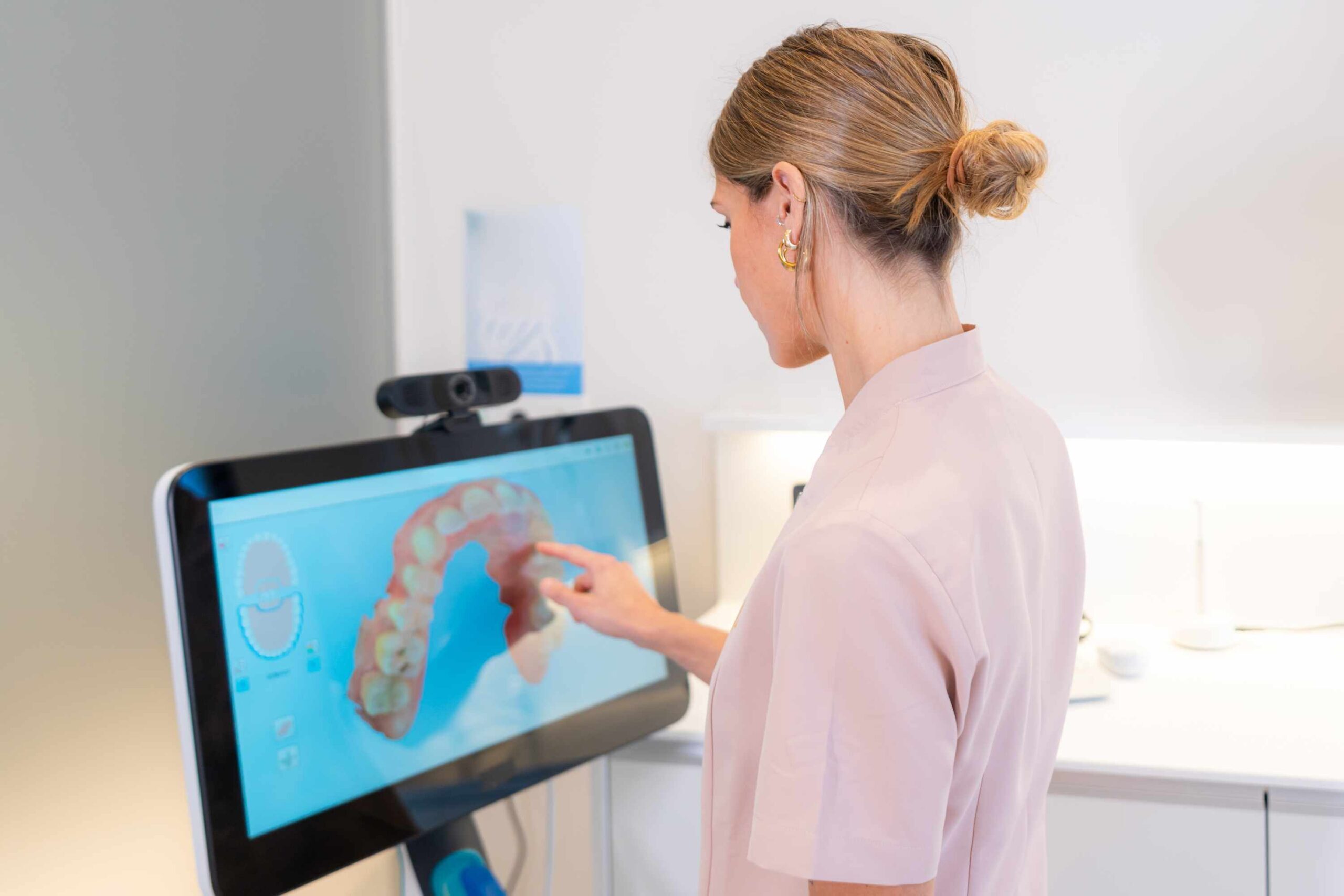
At Elvebak Orthodontics, Dallas patients can receive personalized treatment with options including traditional braces and Invisalign. The practice uses digital technology to plan Invisalign treatment and reports typical treatment durations of approximately 9 to 18 months, depending on case complexity.
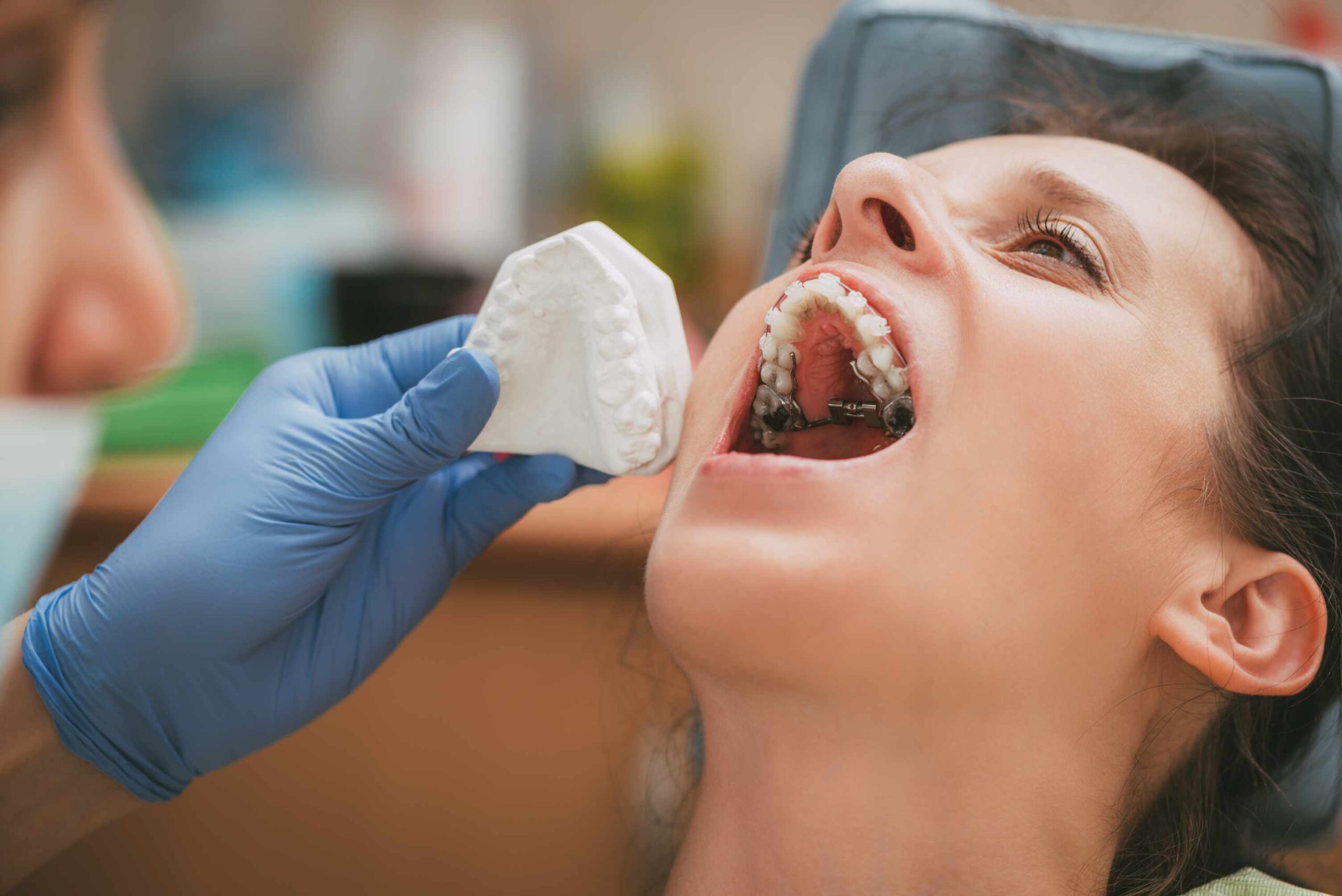
Traditional braces may be appropriate for more complex alignment or bite problems, while clear aligners can provide a discreet option for many patients.
The right choice depends on your teeth, bite, age, oral health, treatment goals, and how much movement is required-not on which option is trending online.
What If You Have a “Mewing” Goal?
Instead of asking only, “Can mewing give me a better jawline?” ask a more useful question:
What is actually causing the change I want?
For example:
- Crooked front teeth may indicate crowding or spacing.
- A prominent overbite may involve tooth and jaw relationships.
- An underbite may require evaluation of both dental and skeletal factors.
- An open bite may be associated with oral habits or functional factors.
- A facial-profile concern may involve skeletal growth rather than tooth position.
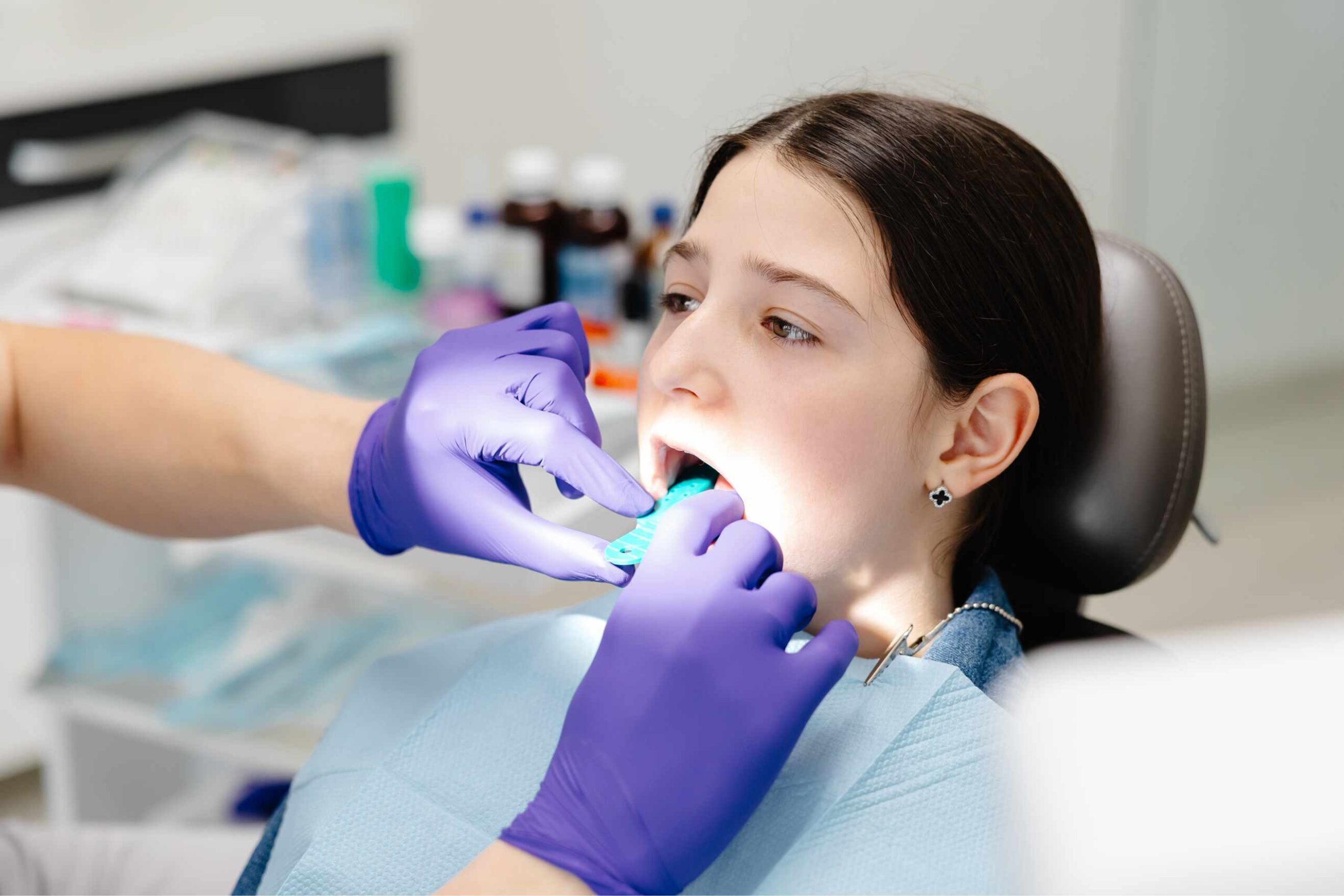
An orthodontist can evaluate these relationships using an examination and, when appropriate, digital scans and X-rays.
That is considerably more informative than judging your jawline from a phone camera.
What Dallas, TX Patients Should Know
If you’ve been trying mewing because you want straighter teeth or a more defined jaw, you’re not alone. The trend has made orthodontic questions increasingly common among teens, young adults, and even older adults.
For patients in Dallas and nearby communities such as Plano, Richardson, Addison, Frisco, and surrounding North Texas areas, the better first step is an orthodontic consultation.
If you’re concerned about your jawline, bite, crowded teeth, or facial development, schedule a consultation and have your individual anatomy evaluated rather than relying on an internet trend.
You can also meet our orthodontist and learn more about the team providing orthodontic care in Dallas and Plano.
The Bottom Line on Mewing
Mewing has generated enormous interest, but the strongest claims-permanently reshaping an adult jawline or straightening teeth without orthodontic treatment-are not supported by current scientific evidence.
Healthy tongue and oral posture can be worth discussing with a qualified professional, particularly when a child has concerns involving swallowing, breathing, or oral habits. But deliberately applying force to your teeth or jaw without professional guidance is not a substitute for orthodontic care.
If you want a straighter smile or are concerned about your jaw development, don’t let a viral trend make the diagnosis.
Let an orthodontist determine what your smile actually needs.
Frequently Asked Questions (FAQ’s)
Does mewing actually change your jawline?
Current scientific evidence does not show that DIY mewing can predictably or permanently reshape an adult jawline.
Can mewing straighten crooked teeth?
Mewing has not been proven to reliably straighten crooked teeth, while braces and clear aligners use controlled orthodontic forces to move teeth.
Is mewing safe for teenagers?
Teenagers should avoid aggressive or unsupervised mewing because developing teeth and jaws can be affected by oral habits and uncontrolled forces.
Can an orthodontist tell if I need jaw or teeth correction?
Yes, an orthodontist can evaluate your teeth, bite, jaw relationships, and facial development to determine whether orthodontic treatment is appropriate.
What works better than mewing for straightening teeth?
Evidence-based orthodontic treatments such as braces and Invisalign provide controlled tooth movement tailored to the patient’s specific alignment and bite needs.
NEW PATIENTS Are WELCOME!
