

How AI Is Changing Braces and Invisalign Treatment in Plano, TX
By Elvebak Orthodontics | August 14, 2026
Artificial intelligence is changing how doctors diagnose conditions, analyze images, and plan treatments. Orthodontics is no exception.
Today, AI can help analyze dental images, identify patterns, assist with treatment planning, monitor tooth movement, and make clear-aligner workflows more efficient.
That raises an obvious question for patients in Plano, TX:
Can AI replace an orthodontist?
Not currently.
AI can become a powerful tool inside orthodontic care, but it does not replace the clinical judgment, physical examination, diagnosis, treatment adjustments, and patient relationship provided by an orthodontist.
The future of braces and Invisalign is less about AI versus orthodontists and more about orthodontists using AI to provide smarter, more personalized care.
What Can AI Actually Do in Orthodontics?
AI systems can process large amounts of information much faster than a person can manually analyze it.
In orthodontics, researchers and dental technology companies are exploring AI applications involving:
- Dental image analysis
- Cephalometric measurements
- Tooth segmentation
- Treatment planning
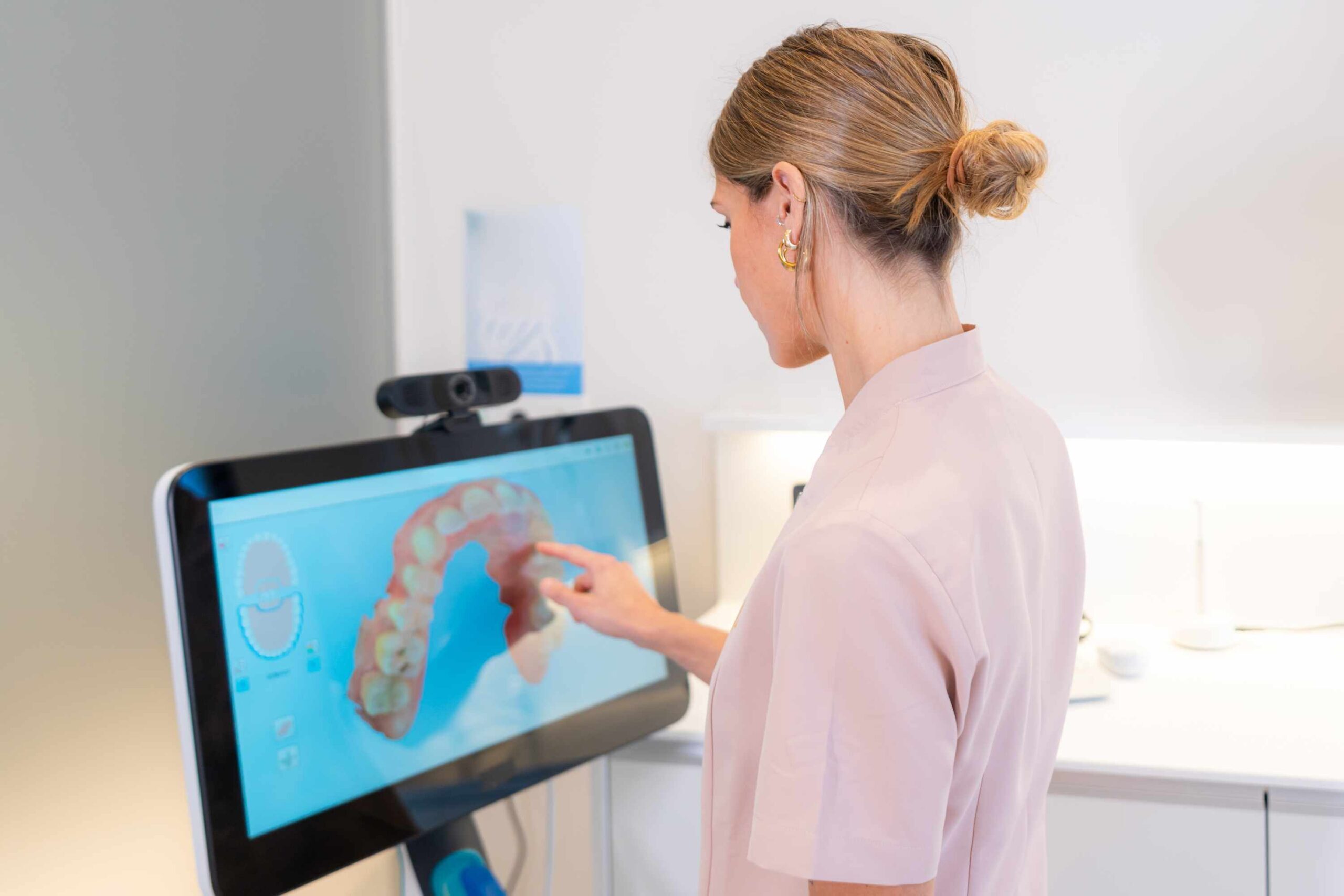
- Digital impressions and scans
- Clear-aligner planning
- Treatment-progress monitoring
- Predicting potential tooth movement
- Identifying orthodontic abnormalities
A systematic review published in the Journal of Orthodontics found that AI applications are increasingly being investigated across orthodontic diagnosis, treatment planning, and prediction, although further research and validation are needed before many applications can be considered fully reliable in routine clinical care. (pubmed.ncbi.nlm.nih.gov)
So yes, AI can do some impressive things.
But analyzing information is not the same as being responsible for a patient’s treatment.
Can AI Diagnose Your Orthodontic Problem?
This is where the distinction becomes important.
An AI system may be able to identify patterns in a scan or radiograph. But orthodontic diagnosis involves more than recognizing an image.
An orthodontist considers factors such as:
- Tooth position
- Bite relationships
- Jaw development
- Facial growth
- Bone and gum health
- Age
- Previous dental treatment
- Patient habits
- Treatment goals
- Long-term stability
Two patients can have teeth that appear similar on a digital scan but require completely different treatment approaches.
That is why AI should be viewed as a clinical support tool, rather than an autonomous orthodontist.
How AI Could Change Invisalign Treatment
Clear aligner treatment is particularly suited to digital technology.
Before treatment begins, orthodontists can use digital scans and specialized software to create a virtual representation of a patient’s teeth. AI-assisted systems can potentially help analyze tooth positions and improve aspects of treatment planning and monitoring.
For patients considering Invisalign in Plano, TX, this can mean a more digital treatment experience from the initial scan through follow-up appointments.
But the software does not independently decide what treatment is best for you.
An orthodontist still needs to determine whether clear aligners are appropriate, evaluate the bite, review the proposed tooth movements, and make clinical decisions throughout treatment.
That human oversight matters because moving teeth is a biological process, not simply a computer animation.
What About AI and Traditional Braces?
AI isn’t limited to Invisalign.
Traditional braces can also benefit from digital orthodontic technologies.
Digital scans, imaging, treatment-planning software, and automated analysis can help orthodontists understand tooth positions and plan how teeth should move.
AI may eventually make certain aspects of bracket placement, treatment prediction, and progress monitoring more efficient.
But braces still require physical components attached to the teeth and periodic professional adjustments.
If a bracket breaks, a wire irritates your cheek, or your teeth are not moving as expected, an AI system cannot replace the hands-on care of an orthodontist.
Can AI Predict Exactly How Your Teeth Will Move?
Not perfectly.
Tooth movement is influenced by biology, bone, periodontal tissues, genetics, compliance, treatment mechanics, and individual differences.
AI can potentially identify patterns from large datasets and help orthodontists estimate how teeth may respond to particular treatment approaches.
But a prediction is not a guarantee.
This is especially important with Invisalign, where wearing aligners according to the prescribed schedule can influence treatment progress.
If your teeth are not tracking as expected, an orthodontist may need to modify the treatment plan, add attachments, order additional aligners, or consider another approach.
Why Human Orthodontic Judgment Still Matters
AI can analyze.
An orthodontist must interpret, decide, explain, and take responsibility for the treatment.
Imagine an AI system identifies that a patient’s lower teeth are crowded.
That information alone doesn’t answer the bigger questions:
Should the teeth be expanded?
Should space be created?
Is extraction appropriate?
Is the bite problem dental or skeletal?
Will the proposed movement remain stable?
Does the patient’s periodontal health allow the planned movement?
Those decisions require clinical evaluation and professional judgment.
The American Association of Orthodontists emphasizes that orthodontic diagnosis and treatment involve the expertise of a trained orthodontist, even as digital technologies continue to evolve. (aaoinfo.org)
What Does This Mean for Patients in Plano, TX?
If you’re looking for braces or Invisalign in Plano, AI can be an advantage when it is used appropriately.
Digital technology may make scans, treatment visualization, monitoring, and planning more efficient. But you should still want an experienced orthodontic team involved in the process.
At Elvebak Orthodontics, patients in Plano and nearby North Texas communities can explore orthodontic treatment options including braces and Invisalign with professional orthodontic supervision. The practice’s Plano office is providing orthodontic care for children, teens, and adults.
Whether you’re considering treatment for yourself or your child, schedule a consultation to have your teeth and bite professionally evaluated.
You can also meet our orthodontist and learn more about the team providing orthodontic care in Plano.
The Future of Orthodontics Is AI + Humans
AI is likely to become increasingly important in orthodontics.
It may help orthodontists process information faster, identify patterns earlier, monitor treatment more efficiently, and create increasingly personalized treatment plans.
But replacing the orthodontist is a different question.
For now, the strongest model is technology supporting clinical expertise, not technology replacing it.
If you’re considering braces or Invisalign, don’t choose treatment based solely on whether an AI system can generate an impressive digital simulation.
Ask who is evaluating your bite, who is responsible for your diagnosis, who monitors your biological response, and who can change the treatment plan when your teeth don’t behave exactly as predicted.
Your smile is biological and your treatment should have a qualified orthodontist behind it.
Frequently Asked Questions (FAQ’s)
Can AI replace an orthodontist?
No. AI can assist with orthodontic diagnosis, treatment planning, imaging, and monitoring, but it cannot currently replace an orthodontist’s clinical judgment and hands-on care.
How is AI used in Invisalign treatment?
AI and digital orthodontic technologies can assist with tooth analysis, treatment planning, digital scans, predicted tooth movement, and treatment monitoring.
Can AI predict how my teeth will move with braces?
AI can help predict tooth movement patterns, but biological differences mean predictions are estimates rather than guaranteed treatment outcomes.
Is Invisalign becoming fully automated with AI?
No. AI can automate or assist with certain digital processes, but an orthodontist still evaluates the patient’s bite, treatment needs, oral health, and progress.
Should I choose an AI-powered orthodontic treatment?
Look for an orthodontic practice that uses appropriate digital technology while maintaining professional diagnosis, supervision, and ongoing treatment management by a qualified orthodontist.

NEW PATIENTS Are WELCOME!
