

How to Avoid the “Invisalign Lisp”: Tips for Speaking Clearly in Your First Week
By Elvebak Orthodontics | April 24, 2026
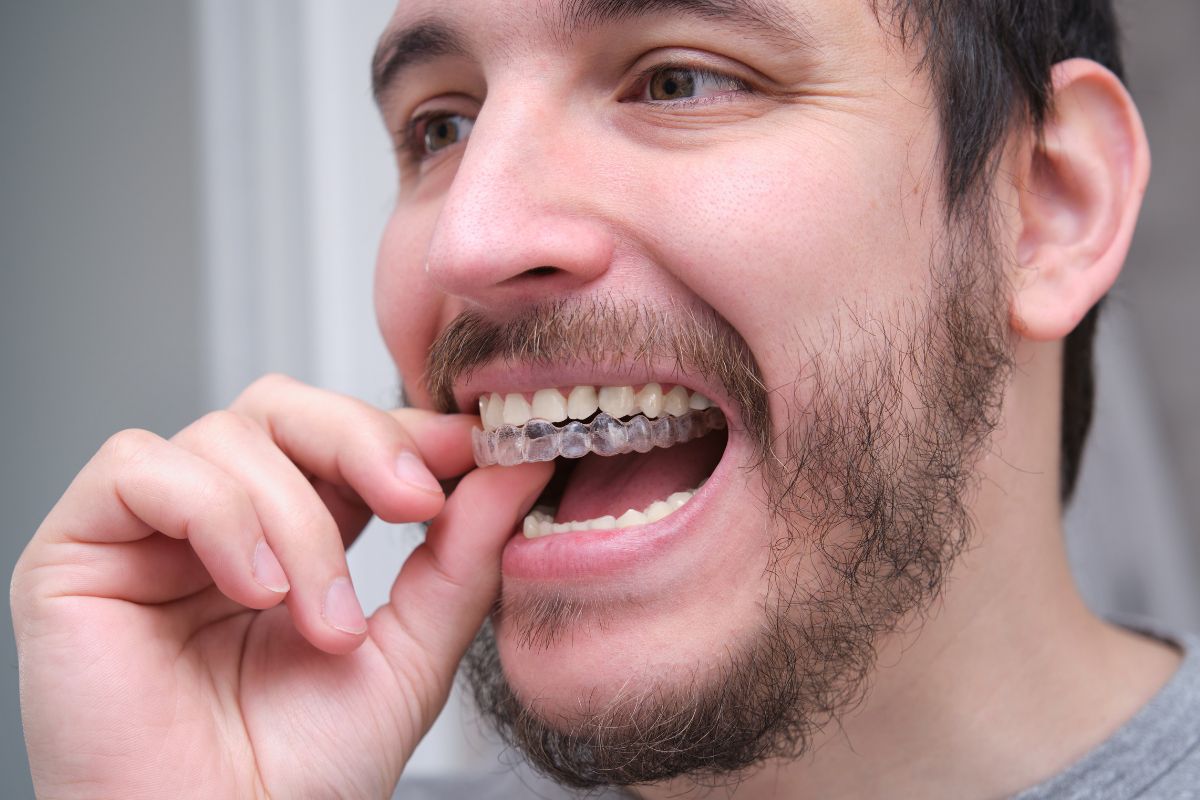
You finally got your transparent aligners. You’re excited about your smile transformation, and then you open your mouth to speak, and something sounds off. Your “s” sounds come out a little fuzzy. A few words feel clumsy. You might even wonder if you made a mistake.
You didn’t actually. What you’re experiencing is the Invisalign lisp, a temporary speech change that affects many people in the first days of wearing clear aligners during their Invisalign treatment.
This guide gives you simple, proven tips to help you speak clearly while your mouth adjusts to your new aligners. Whether you’re days into your invisalign treatment or just starting, these strategies work.
Why Do Discreet Aligners Cause a Lisp in the First Place?
Your tongue has spent years learning exactly where to touch your teeth to make certain sounds. When you add a thin layer of plastic over your teeth, it shifts those contact points, even if only slightly. Your tongue now lands in the wrong spot, and the result is a lisp, especially on sounds like “s,” “z,” “sh,” and “ch.”
There’s also the matter of increased saliva. In the first few days, your mouth treats the aligners as a foreign object and produces extra saliva, which can further affect how clearly you speak.
The adjustment period is essentially a relearning process. Your tongue has to recalibrate around the aligner surfaces. For most people, this happens within one to two weeks—often faster with deliberate practice. For those considering Invisalign in Plano, many local providers emphasize personalized care and guide patients through adjustments, such as temporary speech changes.
Tips to Overcome the Lisp and Speak Clearly in Week One
1. Keep Your Aligners In, Don’t Take Them Out to Speak
This is the single most important rule. Every time you pull out your aligners because speaking feels awkward, you reset the adaptation process. Your mouth can only learn to work around the aligners if the aligners stay in.
Wear them for the recommended 20 to 22 hours a day. Consistency speeds up your adjustment significantly. The more hours your tongue spends navigating around the trays, the faster it recalibrates.
2. Practice Reading Aloud Every Day
Reading out loud is one of the most effective ways to speed up speech adaptation. Pick a book, a news article, or even the lyrics to your favorite songs; it doesn’t matter what you read, just read it out loud.
Aim for at least 10 to 15 minutes a day. Focus on speaking naturally, not perfectly. Over time, your tongue finds its new contact points, and your speech smooths out on its own.
3. Drill the Hard Sounds With Tongue Twisters
Certain sounds are more affected by aligners than others. The “s,” “z,” and “sh” sounds tend to be the trickiest. Tongue twisters target these sounds directly and push your speech muscles to work harder, which means they adapt faster.
Try These A Few Times A Day:
• “Sally sells seashells by the seashore” — great for the “s” sound
• “She should shop for shiny shoes” — targets the “sh” sound
• “Zebra zippers zip through zigzag zones” — works the “z” sound
Start slowly and build speed as you get comfortable. Don’t rush it.
4. Slow Down When You Talk
Most people unconsciously speed up their speech when something feels off, which actually makes the lisp worse. Slowing down gives your tongue extra time to land in the right place and make sounds clearly.
Think of it as speaking with intention. You don’t need to talk noticeably slower, just ease off the pace slightly and pay attention to your enunciation. Your listeners will notice the clarity, not the aligners.
5. Practice in the Mirror to Check Mouth Movement
Speaking in front of a mirror lets you watch how your lips and jaw move. This helps you catch habits like keeping your mouth too closed or not moving your lips enough, both of which make the lisp more noticeable.
Try exaggerating your mouth movements slightly when practicing. It feels awkward at first, but it trains your articulators to be more precise, which naturally leads to clearer speech.
What If the Lisp Doesn’t Go Away After a Week?
For most people, consistent practice resolves the lisp within seven to fourteen days. But if yours sticks around beyond that window, it’s worth checking in with your orthodontist.
A persistent lisp can sometimes point to a fit issue; aligners that aren’t seated properly can exaggerate speech changes and cause other discomforts. Your orthodontic professional can check the fit, make adjustments if needed, and also recommend targeted exercises if the issue is muscular.
In some cases, a patient may have had a mild pre-existing lisp that the aligners temporarily amplified. The reassuring part is that straightening your teeth through invisalign treatment often improves the underlying dental structure that supports clear speech, so many patients find their baseline speech is actually clearer after treatment than it was before.
Still Struggling? Our Team Is Here to Help
At Elvebak Orthodontics, we work with patients every step of the way, from your first set of trays to your final smile reveal. If you’re dealing with a lisp that isn’t improving, an uncomfortable fit, or just have questions about your aligner journey, we’re here for you.
We also welcome patients who are considering starting their smile transformation and want to know what to expect. Whether you’re already in treatment or just curious about getting started, reach out to our office. Schedule your appointment with us. Your clearest smile (and clearest speech) is closer than you think.
Frequently Asked Questions
How long does the lisp from aligners typically last?
For most patients, the lisp resolves within one to two weeks with consistent wear and daily practice. If yours lingers beyond that, contact your nearby dental office so we can check your aligner fit and provide guidance.
Will everyone notice my lisp while I’m wearing aligners?
Usually, it’s far more noticeable to you than to anyone else. Studies show that the vast majority of discreet aligner patients experience little to no noticeable speech change. Your awareness of the lisp tends to be much greater than your listener’s.
Should I remove my aligners when I need to speak in public?
Try to keep them in as much as possible; consistent wear is what speeds up adaptation. If you have a major presentation, you may remove them briefly, but make sure you’re still hitting your 20 to 22 hours of daily wear. Your orthodontist can help you plan around big events.
What sounds are hardest to pronounce with clear aligners?
The “s,” “z,” “sh,” and “ch” sounds are the most commonly affected because they require precise tongue-to-tooth contact. Tongue twisters and daily reading practice targeting these sounds help your mouth adapt quickly.
Can I speed up how fast my mouth adjusts to the aligners?
Yes, practice makes the biggest difference. Reading aloud, using tongue twisters, speaking in front of a mirror, and recording yourself all accelerate the adjustment. Wearing your aligners consistently (without repeatedly removing them) also significantly speeds up the process.
Is it normal to produce more saliva when I first start wearing aligners?
Yes, that’s completely normal. Your mouth initially treats the aligners as a foreign object and responds by producing extra saliva. This typically settles within a few days. Staying hydrated and keeping your trays clean helps reduce discomfort during this phase.
NEW PATIENTS Are WELCOME!
